Teams often don’t struggle because they lack ambition. They struggle because their objectives are unusable. “Increase sales” sounds fine in a meeting, but it gives nobody a target, no team a timeline, and no analyst a clean way to judge whether the campaign worked.
A useful marketing objective sample has to do more than sound strategic. It needs a business outcome, a measurement method, an owner, and a realistic path to execution. That matters even more in influencer marketing, where brands often confuse activity with progress. A batch of creator posts isn’t a result. Tracked bookings, attributable sales, review growth, and reusable content are results.
The gap is obvious in a lot of planning documents. They borrow generic SMART goal language, then stop short of saying what the team will do on Instagram or TikTok, how they’ll track it, and what success should look like by channel, by location, or by creator tier. That’s where campaigns drift.
This guide fixes that. You’ll find eight practical marketing objective sample ideas you can lift into a brief, quarterly plan, or client strategy deck. Each one is built for real operating environments, especially restaurants, ecommerce brands, agencies, and multi-location groups using creator campaigns as a measurable growth channel. Where relevant, I’ve tied examples to actual UK benchmarks and campaign outcomes, and shown how modern creator infrastructure makes execution less manual and more accountable. If you also run hospitality campaigns, these restaurant marketing insights are worth keeping nearby.
1. Drive Store Traffic and Footfall
What should a local campaign be asked to deliver. Reach, engagement, or people walking into a specific site this week?
For physical locations, footfall is the cleaner objective. It gives the team a place, a time window, and a tracking method. That makes it useful in planning documents and even more useful in post-campaign review.
Restaurants are the clearest example. A creator campaign for a single venue usually works best when the brief is tightly scoped: one location, one offer, one audience, one redemption path. Industry reporting from IAB UK on influencer marketing trends has consistently pointed to strong results from local creator activity in hospitality, especially where campaigns are tied to bookings, offers, or measurable in-store actions. The operational lesson is straightforward. Treat footfall as the objective, not as a nice bonus from awareness work.
Copy-paste objective sample
Use wording like this in your plan:
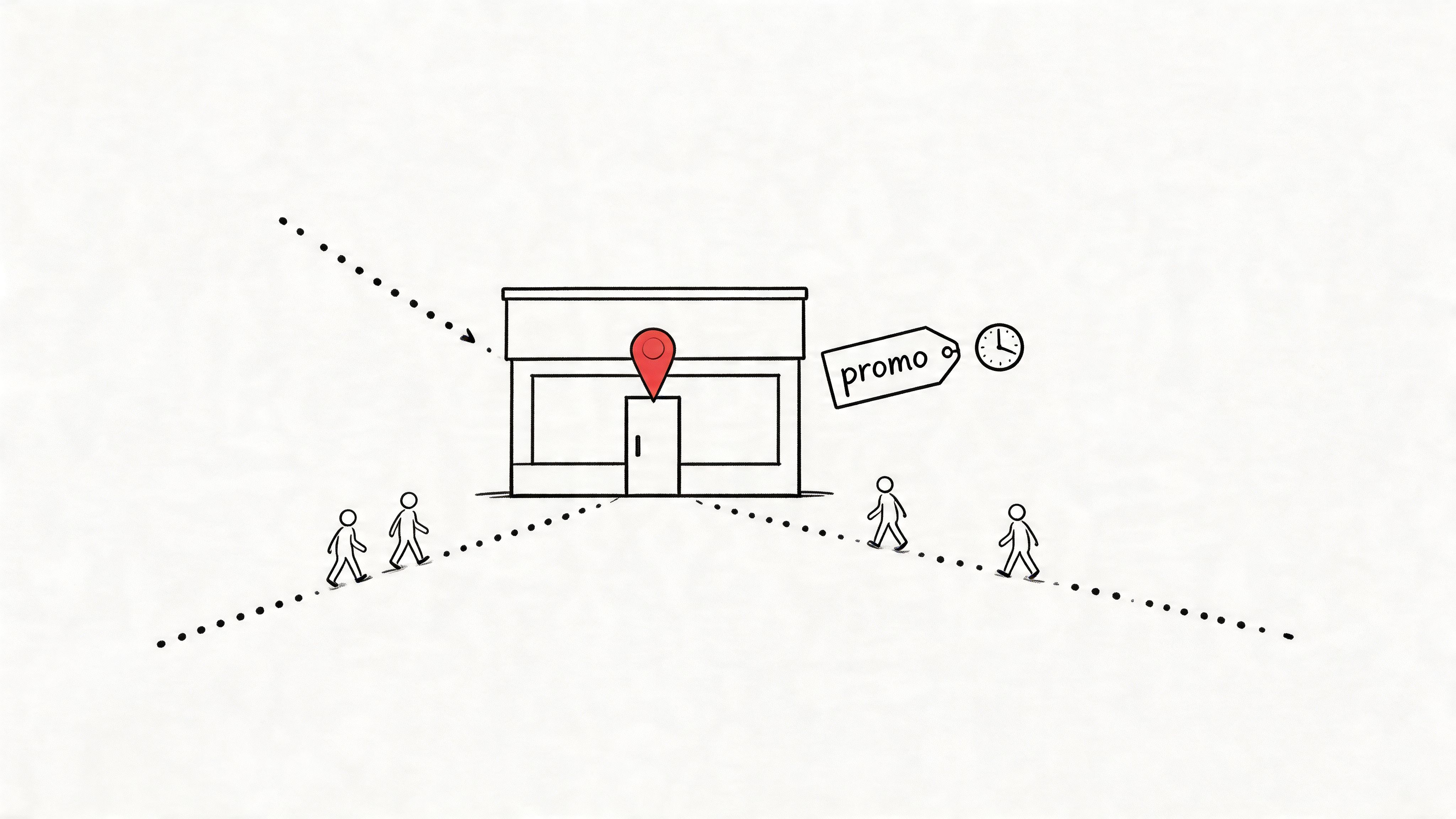
Increase in-person visits to selected locations through geo-matched Instagram and TikTok creator campaigns, measured by location-specific promo code redemptions, bookings, and tracked walk-ins over the campaign period.
This wording does two useful things. It names the channel and it names the proof. If redemptions and bookings do not move, the campaign did not hit the objective, even if the content looked good on social.
How to make it work
Footfall campaigns tend to perform best when four pieces are set up properly:
Local audience fit: Choose creators whose audience can realistically visit. A neighbourhood food creator with 8,000 nearby followers often beats a larger lifestyle account with national reach.
A clear visit trigger: Give people a reason to act now. That might be a lunch deal, limited menu item, event night, or booking incentive.
Location-level tracking: Assign each venue its own code, booking link, landing page, or POS tag so performance can be compared by site.
Tight creative direction: Ask creators to show the visit experience, what to order or expect, and exactly how to redeem the offer.
The trade-off is reach versus action. Broad creators can make the brand feel bigger. Local creators usually drive better store response because proximity and relevance beat polish in this objective.
A quick-service chain trying to fill weekday lunch slots should brief for speed, convenience, price point, and timing. A higher-end restaurant pushing reservations needs a different script. Show atmosphere, menu context, social proof, and a direct booking prompt. Same channel, different job.
Footfall objectives fail when the CTA is vague. They work when the audience knows where to go, when to go, and why it is worth going now.
For multi-location brands, run this as a repeatable system rather than one broad awareness push. Keep the framework the same, then swap the venue, creator shortlist, offer, and tracking code by branch. That is how a modern influencer marketing engine turns creator content into location-level demand instead of a report full of impressions.
2. Increase Product Sales and E-commerce Conversions
Want creator marketing to drive sales, not just engagement screenshots?
This objective needs tighter wording than “increase ecommerce revenue.” A useful version names the sales action, the attribution method, the channel, and the time frame. Without that, teams end up reporting views and comments while finance asks why revenue did not move.
For ecommerce brands, creator campaigns work best when the brief is built around conversion mechanics. Product demonstration, objection handling, offer framing, and a short path to checkout matter more than polished content. That is why smaller niche creators often outperform larger lifestyle accounts on a sales objective. Relevance and buying intent usually beat broad reach.
Copy-paste objective sample
Use this wording:
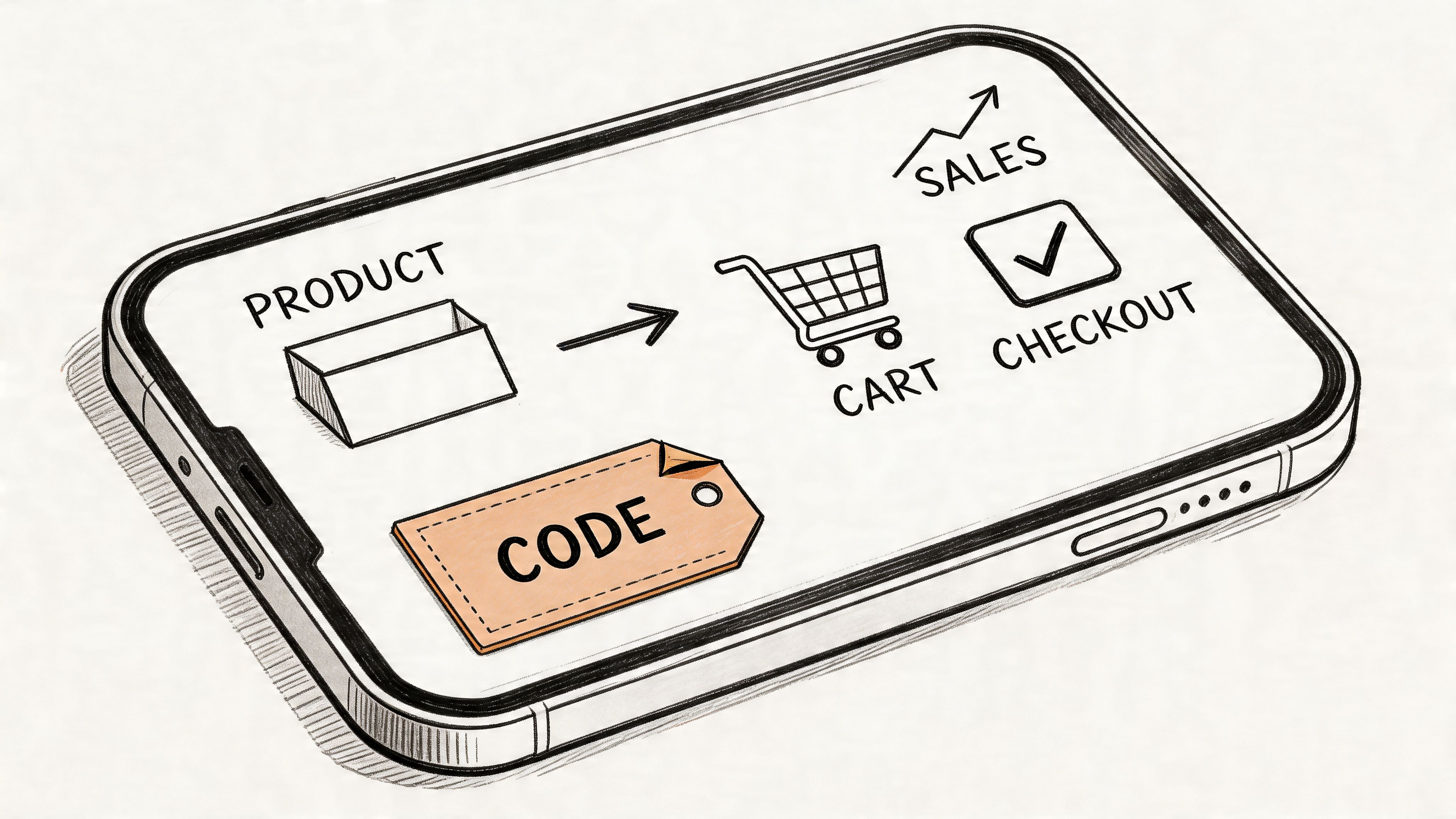
Increase attributed ecommerce revenue from creator-led Instagram and TikTok campaigns by driving tracked purchases through unique discount codes, UTM-tagged links, and paid reuse of high-converting UGC, with weekly reviews against conversion rate, cost per acquisition, and return on ad spend targets.
That gives the team a real operating brief. It defines the channel, the tracking setup, the creative asset type, and the commercial metrics.
Here is what that looks like by industry:
Restaurant brand selling online products
Increase direct-to-consumer sales of meal kits, sauces, or merchandise through creator content on TikTok and Instagram, measured by code redemptions, tracked checkout sessions, and revenue by creator during the campaign period.
E-commerce brand
Increase online purchases for priority products through creator demonstrations, review-style videos, and paid amplification of top-performing assets, measured by attributed revenue, conversion rate by asset, and target ROAS.
How to make it convert
Start with the product, not the creator list. Identify what has the clearest sales story. Bundles, hero SKUs, seasonal products, and products with a visible before-and-after or obvious use case usually convert better than broad catalog pushes.
Then build content around buyer friction. A good creator brief answers the questions a shopper has before they buy. What problem does the product solve? What does it look like in real use? Why buy now? Why buy from this brand instead of the cheaper alternative?
The trade-off is control versus volume. Sending a rigid script protects compliance and message accuracy, but it often hurts performance because the content stops feeling native to the platform. Giving creators more room usually improves click-through and watch time, but it raises the risk of weak CTAs or missing selling points. The practical middle ground is a fixed conversion brief with flexible delivery. Require the hook, product proof, offer, and CTA. Let the creator choose the tone and format.
A modern influencer marketing engine improves this process because it turns creator output into a repeatable sales system. The brand can brief by product line, assign unique tracking links and codes, test creators against the same commercial target, and put paid spend behind the assets that already convert.
KPIs worth tracking
Attributed revenue by creator: This shows who generates sales, not who merely produces attractive content.
Conversion rate by content asset: One creator can drive plenty of clicks and still underperform at checkout.
Cost per acquisition: Revenue matters, but efficiency decides whether the campaign scales.
Average order value: Bundles and upsells can make a mid-volume creator more profitable than a high-volume one.
Promo code redemptions and assisted conversions: Some customers buy later through branded search, retargeting, or saved posts.
Return on ad spend from reused UGC: The strongest creator asset often performs best after the original post, once the brand uses it in paid social.
A good benchmark for this objective is not “did sales go up?” It is “which creators, offers, and assets produced profitable sales we can repeat next month?” That is the standard performance teams should use.
The Social Shepherd’s GoCustom Clothing influencer campaign case study is a useful reference because it ties creator activity to a defined return target rather than vague awareness goals. That is the right model. Set the numeric target before launch, structure the content around conversion, and review performance at creator, asset, and offer level.
3. Build Brand Awareness and Reach
Need more people to know your brand exists, in the right place, among the right buyers? Then treat awareness like a market-entry objective, not a vanity metric.
Awareness gets sloppy when the brief stops at impressions. The stronger version is narrower. Put a location, audience, and campaign window around it. That matters for restaurants opening a new site, ecommerce brands entering a new category, and regional brands trying to build enough familiarity for paid social and search to convert later.
Copy-paste objective sample
Use this in a planning document:
Increase brand visibility among target audiences in priority regions through coordinated creator content on Instagram and TikTok, measured by qualified reach, engagement quality, creator mentions, branded search lift, and site visits during the campaign window.
That wording gives the team a clear job. Reach the right audience, repeat the message often enough to stick, and watch for signals that awareness is turning into intent.
How to set this objective so it actually works
Start with audience fit, not creator size. A restaurant launch in Manchester needs creators whose followers live nearby and act on food recommendations. An ecommerce skincare brand needs creators whose audience matches the product’s age, budget, and concern profile. Broad exposure looks good in a report, but local relevance and category fit are what make awareness useful later.
Message control matters just as much. Give creators a tight angle to communicate. New opening date, signature menu item, launch offer, hero product benefit, or what makes the brand different. If the brief is vague, the content will be vague, and vague awareness rarely improves search demand or site traffic.
I usually prefer a cluster strategy over isolated posts. For a new restaurant, that might mean several local food creators posting within the same week so the brand appears repeatedly in the same city feed. For ecommerce, it can mean a wave of creators hitting one product story from different audience angles. The trade-off is simple. Concentrated activity creates recall faster, but it needs stronger coordination and a cleaner approval process.
Industry-specific objective samples
For restaurants:
Build awareness for the new Liverpool location among local diners aged 18 to 34 through creator content across TikTok and Instagram, measured by local reach, saves, comments showing visit intent, branded search growth, and traffic to the booking or menu page during launch month.
For ecommerce:
Increase awareness of the new product range among target online shoppers through creator partnerships, measured by qualified reach, video completion rate, engagement quality, branded search growth, and first-time visits to the product collection page.
These are stronger than generic SMART statements because they tell the team what market to reach, what signal to watch, and where awareness should show up beyond social metrics.
KPIs worth tracking
Qualified reach: Total reach is too blunt. Prioritise the audience segments and regions that match your launch plan.
Engagement quality: Saves, shares, comments with clear intent, and profile visits tell you more than raw likes.
Branded search trend: Awareness starts working when more people search for the brand by name.
Direct and assisted site visits: Top-of-funnel campaigns often influence traffic before they influence purchases.
Creator mention volume and sentiment: This shows whether the campaign is expanding conversation and whether the reaction is positive.
Frequency across the campaign window: One post can introduce a brand. Repetition is what improves recall.
A good awareness objective answers a practical question. Did we increase visibility with the audience and in the market we care about, enough to support the next stage of growth?
Field note: For awareness campaigns, I’d rather use eight relevant creators in one city or niche than one larger creator with a loosely matched audience.
For a useful benchmark on reach and attention patterns in UK influencer marketing, Influencer Marketing Hub’s 2024 UK influencer marketing overview is a better reference point than generic KPI roundups. Use that kind of source to sense-check creator mix and engagement expectations, then judge your campaign against local relevance, message consistency, and search lift.
4. Generate User-Generated Content for Reuse
What if the best outcome from a creator campaign is not the first post, but the next six weeks of ads, product pages, emails, and organic content it feeds?
A strong UGC objective treats creator work as content production with distribution attached. That matters for restaurants that need a steady flow of menu, atmosphere, and social proof visuals, and for e-commerce brands that need fresh creative to keep paid performance from stalling. If the campaign only produces a temporary reach spike, the value disappears fast. If it produces reusable assets with the right permissions and formats, the campaign keeps paying back after the posting window ends.

Copy-paste objective sample
Use wording like this:
Build a reusable UGC library through creator campaigns for paid social, e-commerce pages, email, and owned channels, measured by approved asset volume, usage rights secured, reuse rate, and performance of repurposed content against existing creative.
That wording gives brand, legal, and performance teams a shared target.
How to make this objective work in practice
UGC goals fail in execution, not in strategy. Teams ask for "some content," then end up with beautiful clips they cannot run in ads, cannot find later, or cannot match to a product launch. The fix is a tighter brief and a reuse plan before the first creator goes live.
Set the campaign up like a production sprint. Define the deliverables, the file specs, the usage rights, the handoff process, and where each asset is supposed to be reused. I usually want each creator brief to specify product angles, shot list, opening hooks, vertical framing, speaking points, and whether paid usage is included. That cuts waste and gives the media team options.
The payoff is operational as much as creative. Better asset tagging, clearer rights, and consistent formats make it easier to reuse content across channels and support effective review generation when creator content also prompts customer feedback and follow-on proof.
Sample objective by industry
A restaurant group might use this wording in a quarterly plan:
Generate a monthly bank of creator-made photo and video assets for menu launches, seasonal offers, interior ambience, and event promotion, with full reuse rights for paid social, local listings, and organic publishing.
An e-commerce brand might write it this way:
Produce a reusable library of creator UGC for product pages, retargeting ads, email campaigns, and organic social, prioritising demo videos, testimonials, unboxings, and problem-solution clips that can replace declining ad creative.
Those are clearer than a generic SMART statement because they define the asset types and the business use case.
KPIs that actually matter
Track the output and the reuse value.
Approved asset volume: Count usable assets, not raw submissions.
Rights secured: Separate organic usage from paid usage and website usage.
Reuse rate: Measure how many approved assets are deployed within 30 to 60 days.
Creative replacement rate: Track whether fresh UGC replaces underperforming ads or stale onsite visuals.
Repurposed asset performance: Compare click-through rate, watch time, conversion rate, or cost per acquisition against existing creative.
Asset retrieval speed: If the team cannot find files quickly, the library is not working.
What to request from creators
Multiple hooks: Different opening lines give paid teams more testing options.
Context-specific proof: For restaurants, that might be table shots, staff interaction, plating, or peak-time atmosphere. For e-commerce, it is often setup, use case, close-up detail, and customer reaction.
Clean and branded variants: Ask for one version with natural speech and one with minimal branding so the asset can be edited for different placements.
Organised delivery: File names should include creator, product, date, and platform format.
For a useful reference on how brands are structuring creator content rights and reuse, CreatorIQ's influencer marketing benchmark and strategy resources are more relevant than generic goal-setting articles. Use a source like that to sense-check your production process, then judge success by whether the assets are usable, searchable, and still driving performance after the original posts fade.
Here’s a useful walkthrough on creator-led asset thinking:
A practical rule applies here. If a creator campaign ends and your paid team cannot pull five ready-to-run assets from it within minutes, the objective was written too loosely.
5. Increase Customer Reviews and Social Proof
Reviews aren’t a side metric for local brands. They influence conversion, discovery, and trust at the exact moment someone is choosing between you and a competitor.
That makes review growth a legitimate marketing objective sample, especially for restaurants, hotels, clinics, salons, and retail locations where social proof changes buying behaviour quickly. Creator campaigns can help because they don’t just generate one published recommendation. They also trigger audience visits, comments, and follow-on reviews from real customers.
Copy-paste objective sample
Use this in planning documents:
Increase review volume and social proof across priority locations by activating local creators, prompting customer feedback with trackable review links, and monitoring review growth, response rate, and sentiment during the campaign period.
That wording connects creator activity to operational follow-through.
Why this works better than generic review asks
People rarely leave reviews because a brand wants them to. They do it when the experience is fresh and the prompt is easy. Creator campaigns can create that moment by sending motivated traffic into a location or product experience, then following up with a direct review path.
If you’re in hospitality, there’s already evidence that creator activity can support this. As noted earlier, UK restaurant micro-collabs were associated with review growth in the same reporting that measured footfall impact. The point isn’t to force every campaign into a review play. It’s to recognise reviews as a downstream commercial outcome worth planning for.
Practical execution
Use direct review paths: Send people to the exact platform where you need more social proof.
Train the location team: Staff should know the promotion running and ask naturally for feedback after a positive interaction.
Respond visibly: Fresh responses make a review profile look active and trustworthy.
For more tactical ideas, this guide on effective review generation is useful. The biggest mistake I see is making review growth “marketing’s job” while operations ignores the in-store experience. Creator campaigns can open the door. The venue or brand still has to earn the feedback.
6. Improve Brand Sentiment and Social Listening
What if the blocker is not reach or conversions, but what people say about your brand after they see it?
Sentiment problems usually show up before revenue problems. A restaurant chain sees the same complaints about service across multiple locations. An e-commerce brand gets strong click volume but comments keep circling back to shipping delays, poor packaging, or confusing sizing. If that pattern keeps repeating, the objective should focus on perception and feedback quality, not just more traffic.
Copy-paste objective sample
Use this wording:
Improve brand sentiment among priority audiences through creator-led content that increases positive brand mentions, identifies recurring complaint themes, and feeds monthly insights into messaging, service, and product decisions.
That wording gives the team something concrete to run. It ties creator activity to listening, then ties listening to operational change.
What actually improves sentiment
Brand sentiment improves when the campaign is built to collect usable feedback, not just publish flattering content. Creators help because they trigger more honest responses than brand channels do. People will often tell a creator the fit was off, the wait time was too long, or the ordering flow was confusing in language they would never use in a survey.
That feedback is only useful if it is sorted properly.
For restaurants, track sentiment by location, visit type, and complaint theme. Separate comments about staff friendliness from comments about food quality, booking friction, cleanliness, and wait times. For e-commerce, break comments into delivery speed, packaging condition, product quality, sizing accuracy, returns, and customer support. A headline metric like "positive sentiment" is too broad to guide action.
Transparency matters here too. If creator posts are poorly disclosed, the campaign can damage trust instead of improving it. The ASA has published clear guidance on influencer ad disclosure, and This benchmark summary on ASA compliance is a useful reference when setting briefing rules. Clear labeling protects the brand and makes positive sentiment more credible.
Strong sentiment programmes surface repeat complaints early, then fix the cause.
How to run this objective in practice
Use creators in controlled test groups instead of one broad burst. Give each group a specific angle to probe. One restaurant creator can focus on speed and convenience, another on staff experience, another on value. One e-commerce creator can test unboxing and packaging, another fit and product quality, another delivery and returns. That structure gives the social listening team cleaner inputs.
Then review feedback in three layers:
Volume: brand mentions, comment count, share of positive vs negative reactions
Themes: repeated praise, repeated objections, and questions before purchase
Actionability: issues marketing can fix in messaging versus issues operations or CX must address
A modern influencer marketing engine earns its keep. It should not just recruit creators and track posts. It should centralise comments, tag sentiment themes, compare creator cohorts, and connect feedback patterns to conversion or retention data. Without that setup, teams end up with screenshots, vague summaries, and no clear owner for the fix.
A planning document for this objective should name the response path up front. Example: if more than a set share of creator-driven comments mention slow delivery, logistics reviews fulfilment SLAs within two weeks. If restaurant creators repeatedly flag booking friction, the ops team audits the reservation flow by branch. Sentiment only improves when someone acts on what the audience is telling you.
7. Launch New Products or Services with Market Validation
What do you need from a launch in the first 30 days. Reach, or proof that the offer will hold up once paid spend increases?
For a new product or service, the objective should force two outcomes at once. Generate early demand and learn what will block scale. That means testing positioning, audience fit, and purchase friction before the wider rollout. A creator campaign is useful here because it produces sales signals and plain-language feedback at the same time.
Copy-paste objective sample
Use this wording:
Launch a new product or service through targeted creator partnerships to validate market demand, identify the highest-converting message by audience segment, and measure early performance through attributed sales or bookings, comment themes, and creator-level results by niche and region.
That wording works well in planning documents because it gives the team a commercial target and a research target.
How to structure the launch test
Do not brief every creator with the same angle. Split the launch into deliberate test cells. For a restaurant, one local food creator can lead with taste, another with value, another with convenience for weekday visits. For e-commerce, one creator can focus on product quality, another on fit or use case, another on delivery speed or returns.
This setup gives cleaner answers to practical questions. Which message gets clicks. Which message gets saves or shares. Which objection appears before purchase. Which creator niche brings curiosity but not conversion.
A modern influencer marketing engine matters here because launch teams need more than post links in a spreadsheet. They need creator-level tracking, region splits, code or link attribution, comment tagging, and side-by-side comparisons across angles. If the campaign cannot separate message performance from creator performance, the team learns less than it should.
Strong launch KPIs
Attributed bookings, first purchases, or trial sign-ups
Conversion rate by creator, audience segment, and message angle
Comment themes, pre-purchase questions, and repeated objections
Performance by region or branch location for local launches
Cost per acquisition and early revenue efficiency, with a clear view of ROI vs ROAS
Marketing objective sample in practice
A restaurant launching a seasonal menu should avoid one national burst with generic foodie content. Use local creators by neighbourhood, assign each a distinct angle, and compare bookings by branch, code redemption, and comment themes. If one dish gets strong engagement but weak bookings, the issue may be price, not awareness. If value-led content converts better than chef-story content, the rollout creative should reflect that.
An e-commerce brand launching a new skincare line should segment creators by skin concern, not just follower count. Acne-focused creators may generate stronger saves and questions. Sensitive-skin creators may produce fewer clicks but better conversion once the audience trusts the claims. Those are different commercial roles, and the objective should leave room to judge them differently.
The sample wording in a planning document can be even more specific:
Validate demand for the new product launch by testing three creator messaging angles across priority audience segments, with success measured by first-purchase volume, conversion rate, objection themes, and repeatable creator-level performance that can guide the next media allocation.
That is the difference between a launch campaign and a launch test. One buys attention. The other gives the team evidence they can use.
8. Achieve Measurable ROI and Attribution Across Campaigns
How much budget are you willing to keep spending on creator campaigns you cannot prove worked?
Teams usually ask for attribution after finance starts pushing back. By then, the damage is already practical: weak creator selection, unclear budget allocation, and reporting no one trusts. If the objective does not define how revenue, bookings, or redemptions will be tracked at creator level, the campaign is harder to improve and even harder to scale.
For agencies, restaurant groups, and e-commerce brands, this objective turns influencer activity into an accountable growth channel. It sets the rules before launch: one creator, one code set, one UTM structure, one reporting view, and one decision framework for what gets more spend next month.
Copy-paste objective sample
Use this wording:
Achieve measurable return from creator campaigns by tracking performance through unique promo codes, UTM-tagged links, and centralised reporting, with optimisation decisions based on attributed revenue, conversion rate, assisted conversions, and creator-level efficiency by campaign and channel.
That final clause matters. A restaurant chain may care more about table bookings and voucher redemptions by location. An e-commerce team may care more about blended CAC, first-order revenue, and repeat purchase rate from creator-acquired customers. The objective should match the commercial model, not force every brand into the same reporting template.
How to make attribution usable
The target is not perfect attribution. The target is attribution good enough to make better budget decisions.
Use a setup like this:
Assign one promo code per creator, and separate codes by platform if the same creator posts on TikTok and Instagram
Use a fixed UTM naming convention across every link so paid, organic, and creator traffic can be compared cleanly
Track direct and assisted conversions separately so upper-funnel creators are not judged by last-click revenue alone
Review performance in one dashboard that combines spend, clicks, conversions, revenue, and content output
Set a decision rule before launch such as pause, scale, retest, or rebrief after the first reporting window
Operator’s rule: If a campaign cannot be measured at creator level, it cannot be optimised properly.
Here is what that looks like in practice. A restaurant brand running a local creator campaign should not stop at reach and engagement screenshots. It should tie each creator to a booking link, redemption code, or branch-specific offer, then compare revenue by location, daypart, and content angle. A value-led offer may drive more covers midweek, while chef-led content may lift higher-value bookings on weekends. Those are different outcomes, and attribution needs to show the difference.
An e-commerce team should go one layer deeper. Creator A might produce lower click volume but higher average order value. Creator B might drive stronger first-purchase volume but weaker margin once discount use is factored in. Without creator-level attribution, both can look equally strong in a top-line report when they are not equally profitable.
A practical external example comes from BOOM Events. In BOOM Events' campaign case study, the team tied spend to tracked ticket revenue and monitored results closely during a short campaign window. The channel mix differs from influencer work, but the operating lesson is the same: define the measurement method first, monitor performance while the campaign is live, and adjust based on tracked commercial outcomes rather than post-campaign guesswork.
For teams that need cleaner financial language in planning documents, align on ROI vs ROAS before launch. Finance, brand, and paid media teams often use those terms differently, which creates reporting disputes that have nothing to do with campaign performance.
Sample wording for planning documents
Measure creator campaign efficiency across channels using unique codes, UTM-tagged links, and centralised attribution reporting, with success evaluated by attributed revenue, assisted conversions, cost per acquisition, return on spend, and repeatable creator-level performance that informs future budget allocation.
That wording is stronger than a generic “improve campaign ROI” goal because it tells the team exactly what to track, how to judge results, and what decision the data should support.
8-Point Marketing Objective Comparison
Objective | Implementation Complexity 🔄 | Resource Requirements ⚡ | Expected Outcomes 📊 | Ideal Use Cases 💡 | Key Advantages ⭐ |
|---|---|---|---|---|---|
Drive Store Traffic and Footfall | 🔄 Medium, geo-targeting, real-time footfall tracking | ⚡ Moderate, local creators, promo codes, in-store tracking | 📊 Increased visits and in-store revenue; measurable via codes | Restaurants, multi-location chains, cafes, hospitality venues | ⭐ Direct sales correlation; high ROI for venue-based businesses |
Increase Product Sales and E‑commerce Conversions | 🔄 High, UTM/attribution, cross-device tracking | ⚡ High, creator scale, tracking links, dashboards | 📊 Measurable conversions, improved CAC and repeat purchases | DTC and ecommerce brands, agencies | ⭐ Scalable, data-driven revenue impact |
Build Brand Awareness and Reach | 🔄 Medium, multi-creator coordination and brand consistency | ⚡ Moderate, many creators, ongoing content flow | 📊 Expanded reach, higher brand recall and engagement | New/expanding brands, growth marketers, agencies | ⭐ Cost-effective reach and strong niche engagement |
Generate User‑Generated Content (UGC) for Reuse | 🔄 Medium, licensing and rights management | ⚡ Moderate, content library, licensing agreements | 📊 Reusable assets that lower production cost and boost ad performance | DTC brands, agencies, multi-location chains | ⭐ Multiple uses from one creator investment; faster execution |
Increase Customer Reviews and Social Proof | 🔄 Low, review drives and testimonial collection | ⚡ Low, incentives, direct links, monitoring tools | 📊 More reviews, improved ratings and local SEO impact over time | Restaurants, hotels, retail, hospitality venues | ⭐ Builds trust and influences purchase decisions |
Improve Brand Sentiment and Social Listening | 🔄 Medium, continuous monitoring and analysis | ⚡ Moderate, listening tools, staffing for response | 📊 Early issue detection, improved reputation and engagement | PR/social agencies, growth marketers, multi-location brands | ⭐ Data-driven reputation management and community building |
Launch New Products or Services with Market Validation | 🔄 High, coordinated launches and feedback loops | ⚡ Moderate‑High, early access campaigns, feedback systems | 📊 Market validation, early testimonials, reduced launch risk | DTC brands, restaurants, ecommerce launching new SKUs | ⭐ Real user insights that de-risk product launches |
Achieve Measurable ROI and Attribution Across Campaigns | 🔄 High, multi-touch attribution and privacy-safe tracking | ⚡ High, analytics stack, unique codes, dashboards | 📊 Clear revenue attribution, optimized spend, CAC visibility | Performance marketers, DTC brands, agencies | ⭐ Proves ROI and identifies top-performing creators |
From Objective to Outcome Your Action Plan
A strong objective does two jobs at once. It gives the team a clear target, and it tells them what not to do. That second part's importance is frequently underestimated. Once an objective is properly written, random tactics become easier to reject because they don’t support the outcome you agreed to measure.
That’s why the best marketing objective sample usually feels slightly restrictive. It names the channel, the audience, the business result, the tracking method, and the review cadence. It removes wiggle room. For restaurants, that might mean footfall, bookings, review growth, or branch-level performance. For ecommerce brands, it usually means attributed revenue, conversion rate, creator efficiency, and reusable UGC. For agencies, it often means proving outcome by client, location, and creator set in a way that survives budget scrutiny.
The practical pattern is simple. Start with one commercial outcome. Pair it with the creator mechanism most likely to move it. Then attach the measurement system before the campaign starts, not after the content goes live. If the team can’t explain how a TikTok post becomes a click, how a click becomes a booking or sale, and how that outcome gets logged, the objective still isn’t ready.
This is also where modern creator infrastructure changes the game. A lot of influencer campaigns underperform because the operating model is messy. Manual sourcing, inconsistent briefs, scattered approvals, reused spreadsheets, and missing links all create friction. The work isn’t failing because creator marketing doesn’t work. It’s failing because the setup is brittle. Platforms like Sup are useful because they standardise the parts that usually break: verified creator matching, outreach, unique codes, UTMs, communication, dashboard reporting, and content collection for reuse.
There’s also a speed advantage when the process is centralised. Sup’s platform is built around launching campaigns in about 20 minutes, saving up to 95% of the manual time, while collecting views, clicks, redemptions, and revenue in one place. For a lean ecommerce team or a multi-location restaurant group, that changes what’s realistic to execute consistently. It becomes possible to run local creator activity as a repeatable programme instead of a series of one-off experiments.
If you’re choosing where to start, don’t pick the objective that sounds most impressive. Pick the one your business can support operationally. A restaurant with uneven service quality shouldn’t jump straight to scale. Fix sentiment and reviews first. A DTC brand with strong traffic but weak creative should prioritise UGC for reuse. A mature brand with budget pressure should tighten attribution and creator-level ROI before expanding spend.
Good objectives don’t make marketing easier. They make it clearer. And clear campaigns are the ones you can improve, defend, and scale.
If you want a faster way to turn these frameworks into live campaigns, Sup is built for exactly that. It helps restaurants, ecommerce brands, agencies, and multi-location teams source matched micro and nano creators, launch with tracking already in place, collect UGC, and attribute results from views to revenue without wrestling spreadsheets and manual DMs.

Matt Greenwell
Share