
You’re probably dealing with one of two versions of instagram influence marketing right now.
In the first, you’ve run a few creator campaigns, got some decent content, saw a spike in likes, and still couldn’t say with confidence what drove bookings, orders, or repeat sales. In the second, you haven’t started properly because the whole thing feels messy. Too many DMs, unclear pricing, shaky reporting, and no clean way to compare one creator against another.
That’s the problem. Most brands don’t fail at influencer marketing because Instagram doesn’t work. They fail because they run it like a series of isolated bets instead of a system.
The brands that get consistent results treat creator partnerships like a performance channel with a creative layer on top. They define commercial outcomes first. They source creators against customer fit, not vanity. They use repeatable briefs, repeatable outreach, repeatable tracking, and repeatable reporting. That’s how instagram influence marketing stops being a hopeful brand exercise and starts acting like a growth engine.
Building Your Campaign Foundation for Measurable Results
A weak campaign usually starts with a soft objective.
“Build awareness” sounds harmless, but it creates bad decisions fast. It gives you no filter for creator selection, no budget discipline, and no clean way to judge whether the campaign worked. If you’re serious about instagram influence marketing, every campaign needs a business outcome attached to it before you contact a single creator.
UK brands are already treating the channel as a serious budget line. 80% maintained or increased influencer budgets in 2025, and 47% raised them by 11% or more. The same dataset reports influencer marketing delivering $5.78 ROI for every $1 spent according to UK influencer budget and ROI benchmarks. That doesn’t mean every campaign performs well. It means the upside is strong enough that disciplined operators keep investing.
Start with the commercial target
Use goals that can be counted in revenue events, not vague marketing language.
For a restaurant, that might be:
Table bookings: A fixed number of tracked bookings during a campaign window
Walk-ins: Promo code redemptions tied to a local creator
Review growth: More first-party or third-party reviews after exposure
Menu item sales: A featured dish or offer attached to each creator code
For a DTC brand, that usually looks like:
First-time purchases: New customer orders tied to creator-specific links
Product launch sales: Revenue on a featured SKU or bundle
Email or SMS captures: If the campaign supports a later conversion path
Repeatable ROAS: A threshold that justifies reinvestment
A good campaign brief starts with one primary outcome and one secondary outcome. More than that, and teams start optimising for everything and winning at nothing.
Practical rule: If finance wouldn’t recognise the outcome as commercially meaningful, it shouldn’t be the primary KPI.
Set budget logic before creator outreach
Often, the reverse happens. Teams ask creators for rates, then try to make the maths work afterwards. That usually leads to overpaying for reach and underinvesting in tracking.
Instead, work backwards:
Define your conversion event
Assign the value of that event
Set an acceptable acquisition threshold
Estimate how many creators you can test without losing control of reporting
Reserve budget for fulfilment, gifting, tracking, and follow-up
The important part isn’t building a perfect forecast. It’s forcing a commercial standard before emotion enters the room. If a creator looks great on feed but can’t realistically support your acquisition target, they’re not the right fit for that campaign.
Build the customer and creator profile together
Your ideal customer profile and ideal creator profile should mirror each other.
If you run a multi-site brunch concept in Manchester, don’t just ask for “food influencers.” You need creators whose audience is local enough to act, whose content already shapes dining decisions, and whose tone matches the experience people get in venue. The same applies to ecommerce. If you sell premium skincare, a creator who gets likes from giveaway hunters is far less useful than one whose audience saves tutorials, asks product questions, and already buys from recommendation-driven content.
A simple creator profile should include:
Audience geography: Especially for restaurants, hospitality, and local service brands
Category relevance: Fashion, beauty, fitness, family, food, home, depending on what you sell
Content format strength: Reels, Stories, carousels, talking-head reviews, tutorials
Commercial intent: Do followers ask where to buy, how to book, or whether something is worth it
Brand fit: Tone, aesthetic, and values
Define the operating model early
The campaign model changes the economics.
A one-off gifting push can work for content seeding, but it’s rarely enough if your real goal is measurable revenue. A paid plus affiliate structure often creates better alignment because you’re paying for production while still rewarding conversion. If your team is planning creator-led commerce, it’s worth reviewing practical frameworks around 2026 Instagram affiliate success so your commercial model matches the way Instagram drives purchases.
Before launch, lock these decisions:
Campaign type: Gifting, paid, affiliate, or hybrid
Primary content unit: Reel, Story sequence, static post, or a mix
Attribution method: UTM links, unique promo codes, booking links
Approval level: Full pre-approval, light review, or creator-led execution
Reuse rights: Organic only, paid usage, website usage, email usage
Brands that skip this stage usually create friction later. Creators wait for answers. Internal teams change goals halfway through. Reporting turns into guesswork. None of that is a creator problem. It’s an operating problem.
Sourcing and Vetting Authentic Instagram Creators
A team pulls a list of 50 Instagram creators, picks the biggest names, sends product, then waits for sales that never show up. The problem usually starts much earlier. Creator sourcing was treated like a one-off hunt instead of a repeatable selection system.
Good programmes are built on filtering, not guesswork. The job is to identify creators who can reliably produce three things at once: audience fit, credible engagement, and content that supports conversion. Follower count sits well below those factors.
In the UK, micro-influencers on Instagram average a 3.86% engagement rate, compared with 1.21% for mega-influencers, and 73% of UK brands prefer micro creators for the engagement-to-cost ratio according to UK micro-influencer Instagram data. For many restaurants, DTC brands, agencies, and franchise groups, that is where efficient testing usually starts.
Prioritise audience match before creator appeal
A creator can be talented, polished, and still wrong for the brief.
For local brands, geography is often the first hard filter. If the commercial goal is bookings, footfall, or in-store sales, the audience needs to be close enough to act. For ecommerce, the standard shifts from proximity to buyer relevance. The audience should already care about the category, understand the use case, and show signs of purchase behaviour in comments and Story replies.
Check the account through that lens first:
Location fit: Followers need to be able to buy, visit, or book
Category consistency: Repeated posting in one niche usually signals stronger audience trust
Audience language: Comments often reveal intent, budget sensitivity, and whether followers are in-market
Commercial signals: Questions about price, availability, results, and codes matter more than generic praise
One useful first filter is a quick Instagram engagement rate calculator. It will not validate audience quality on its own, but it does help remove obvious mismatches before your team spends time on manual review.
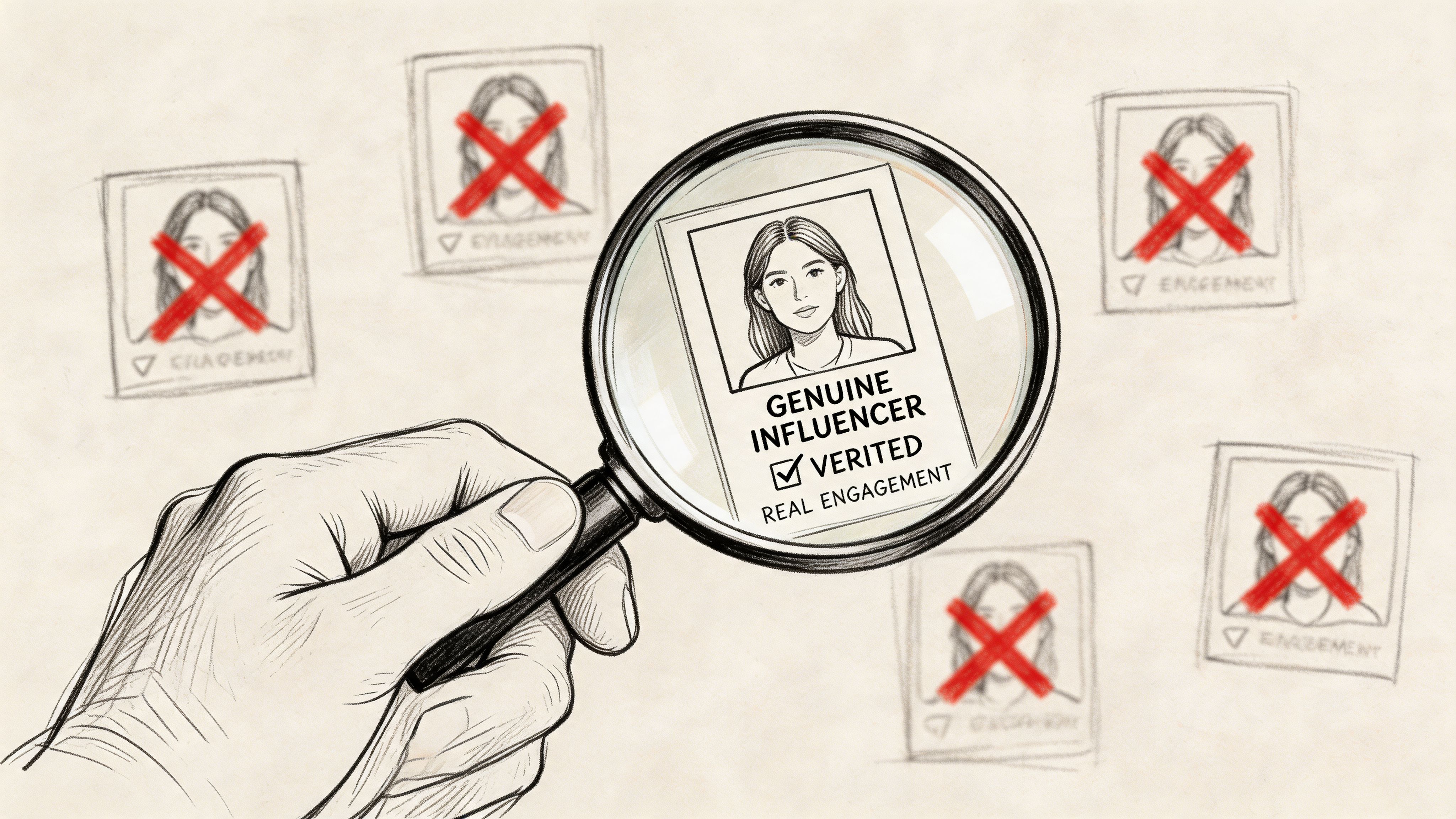
Audit engagement quality, not just activity
High visible engagement can still be low commercial value.
The easiest mistake here is to accept surface metrics at face value. A post with lots of likes and short comments may look healthy, but the comment pattern often tells a different story. Repetitive wording, weak conversation, and praise that could fit any post usually point to low audience connection or inflated activity.
I use a simple three-pass review.
First, scan the last 10 to 15 posts manually. Look for comments that reference the actual content, ask follow-up questions, or mention prior recommendations. Those are stronger signs of influence than raw like counts.
Second, compare format performance. If Reels, Stories, and carousels all generate engagement that fits the creator’s style and size, that is a healthier signal than one format producing random spikes with no matching discussion.
Third, inspect follower quality. Sudden jumps in followers, audiences that do not match the creator’s niche, or obvious mismatch between audience language and your target market should push the account into a secondary review queue.
Most fraud is easy to spot once someone is responsible for looking closely.
Use a repeatable vetting framework
The goal is not to find a few creators you happen to like. The goal is to create a sourcing standard your team can apply every month, across campaigns, without quality drifting.
1. Audience fit
Start with the customer.
For a local pizza chain, a strong creator usually has local followers, regular food or lifestyle content, and comments that suggest real dining decisions. For a beauty brand, stronger signs include tutorial content, ingredient conversations, before-and-after interest, and followers asking practical product questions.
This step removes a lot of bad options quickly. Large creators often fail here because their audience is too broad, too international, or too passive to drive measurable action.
2. Engagement integrity
Next, confirm that the audience is believable enough to invest in.
Manual review matters more than many teams admit. Suspicious patterns often sit in plain sight: identical comments across posts, follower growth that jumps without a clear reason, or sponsored content on every other upload. Those accounts can still generate impressions, but they rarely produce efficient ROI.
Look for:
Comment relevance: Specific reactions beat generic compliments
Follower consistency: Growth should be gradual or clearly tied to a moment that explains the spike
Ad load: Too many paid posts can reduce trust and response
Story proof: Ask for screenshots or native insights when reach and taps matter to the brief
3. Brand safety
Brand safety is part of performance, not a separate legal check.
If a creator creates avoidable risk, the campaign gets slower, approvals get heavier, and internal confidence drops. Review tone, past partnerships, disclosure habits, audience interactions, and how the creator handles criticism. A strong creator does not need to sound corporate. They do need to be safe enough for your category and consistent enough to work inside a programme.
Build a working roster instead of starting from zero
Shortlists are fine for a single campaign. Rosters are better for growth.
A usable creator roster should separate accounts by status so the next campaign does not restart the sourcing process from scratch:
Primary test creators: Strong fit and ready for outreach
Secondary creators: Good options for backup, expansion, or format testing
Watchlist creators: Promising, but they need more data or another review cycle
Do not use: Poor fit, suspicious engagement, or brand risk
Sourcing then becomes an engine. Once the roster is maintained properly, your team can compare creator cohorts, track who drives bookings or sales, and re-invest in winners instead of repeating the same discovery work every quarter. That is how instagram influence marketing becomes measurable and scalable, rather than expensive and inconsistent.
Crafting Compelling Outreach and Activating Partnerships
Most creator outreach fails before the creator even reads the offer.
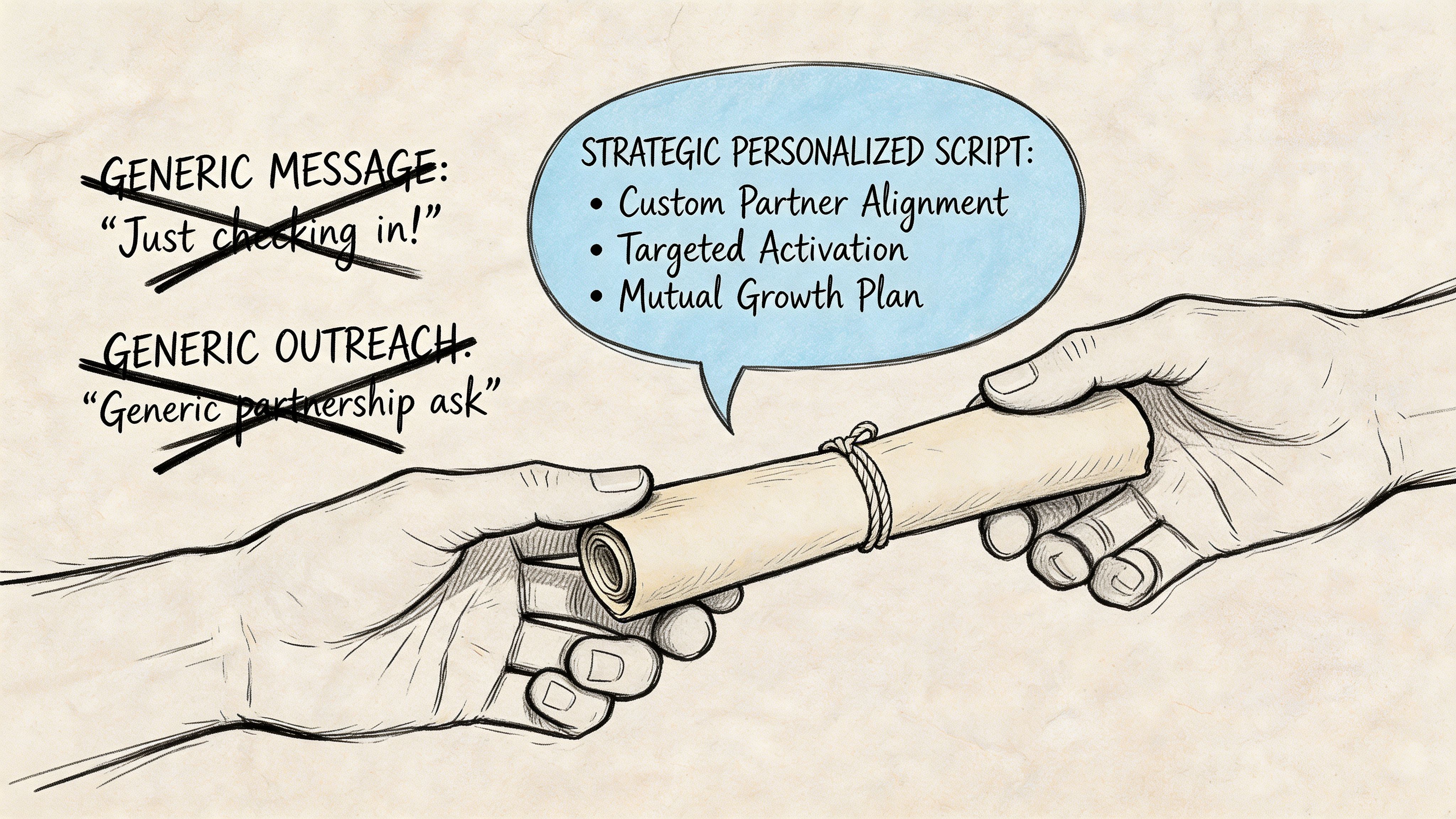
It fails because the message feels mass-sent, the ask is vague, and the brand sounds like it sees the creator as media inventory instead of a partner. Good outreach doesn’t need to be long. It does need to prove relevance quickly.
What strong outreach actually does
A useful first message handles four jobs in a few lines.
It shows you know who the creator is. It makes the fit obvious. It gives enough campaign context to earn a reply. And it lowers the effort required for the creator to say yes to the next step.
Generic outreach usually sounds like this: “Hey, love your content, want to collaborate?” That message creates work for the creator. They have to guess the category, the deliverable, the commercial model, and whether the sender is serious.
Better outreach sounds organised and specific.
DM template for a local hospitality brand
Hi [Name], I’ve been following your food content around [location], and your posts on [specific place or format] stood out because your recommendations feel local and usable, not generic.
I’m with [Brand], and we’re planning a creator campaign around [offer, menu launch, opening, seasonal push]. We think your audience is a strong fit because of your focus on [relevant angle].
The collaboration would include [deliverable outline], with tracking in place so we can measure bookings or redemptions properly. If you’re open to it, I can send the brief and budget details.
Email template for a DTC brand
Subject: Partnership idea with [Brand] x [Creator Name]
Hi [Name], I’m reaching out from [Brand]. We’ve been reviewing creators who consistently post around [niche], and your content on [specific topic or recent post] caught our attention.
We’re planning a campaign for [product or collection], and your audience appears well aligned with the customer we’re trying to reach. We’d love to discuss a paid partnership that includes [content type], along with tracked links or a unique code so performance is clear on both sides.
If it’s relevant, I can send a short brief with deliverables, usage terms, timing, and budget range.
Why this gets replies
The psychology is simple. Creators want clarity, respect, and a sense that the brand has done its homework.
Use these principles:
Lead with observed relevance: Mention a post, angle, or format that proves this isn’t a mail merge
State the commercial context: Is this gifting, paid, affiliate, or hybrid
Reduce ambiguity: Mention content type, timing, and tracking
Create a low-friction next step: Don’t dump a contract into the first message
A creator doesn’t need a perfect brief in the first touch. They need enough signal to know you’re credible.
Negotiate for alignment, not just lower cost
The cheapest deal often becomes the most expensive campaign.
If the creator underprices the work, rushes production, or treats the post like an obligation, performance usually suffers. The better negotiation question is whether the structure creates the right incentives.
Here’s where each model tends to work:
Gifting only: Best for seeding, early testing, and low-risk product trial
Flat fee only: Best when content production quality is the main asset
Affiliate only: Useful when the creator already has strong commercial intent, but risky if there’s no upfront buy-in
Hybrid model: Usually the cleanest balance for scalable programmes
Be direct on usage rights too. If you want to use creator content on paid social, in email, or on product pages, put that in the agreement before the shoot happens.
The brief should direct the outcome, not script the post
Overwritten briefs kill authenticity. Underwritten briefs create inconsistency.
The best briefs are short, practical, and built around guardrails. Creators should know the commercial goal, the offer, the mandatory elements, and the things they must avoid. They should also have room to shape the execution in a way their audience will trust.
A campaign brief should include:
Objective: The business result that matters
Deliverables: Reel, Story set, static post, timing, and posting window
Core message: What the audience needs to understand
CTA: Shop, book, visit, redeem, review
Tracking requirements: Link placement, promo code use, screenshot expectations
Compliance notes: Sponsored disclosure requirements
Usage terms: Organic reposting, paid usage, website use, duration
Operational discipline matters here
A lot of campaign pain isn’t creative. It’s administrative.
Missed deadlines, duplicate follows-up, version confusion, and payment delays all reduce creator goodwill. Teams need one source of truth for status, approvals, deliverables, and tracking requirements. That can be a lightweight project board, a shared tracker, or a platform that handles campaign setup and communication. The point is consistency.
If you want repeatable instagram influence marketing, outreach and activation can’t depend on whoever is most organised that week. They need a workflow that survives volume.
Building Your Attribution Engine to Track Real ROI
If you can’t tie creator activity to revenue events, you don’t have a growth channel. You have content spend.
This is the point where many programmes break. The campaign launches, content goes live, screenshots start coming in, and then reporting fragments across Shopify, booking platforms, Google Analytics, spreadsheets, DMs, and promo code exports. Attribution doesn’t fail because tracking is impossible. It fails because teams build it too loosely.
Start with the operating model below.
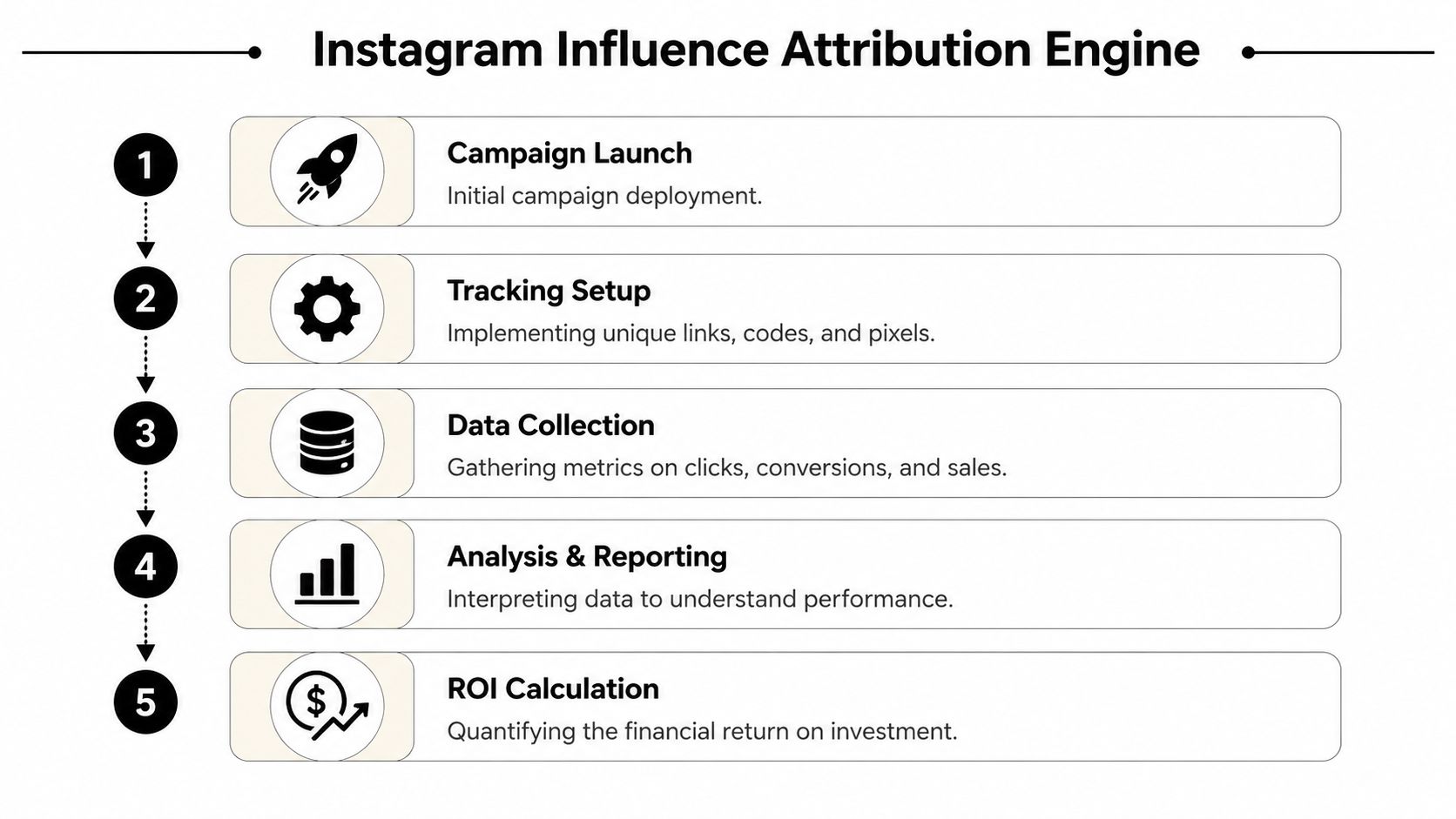
The five-part attribution setup
1. Create one tracking structure per creator
Every creator needs their own link architecture. No shared links, no recycled naming, no shortcuts.
Use UTM parameters that identify:
Source: Instagram
Medium: Influencer
Campaign: Brand and campaign name
Content or term field: Creator identifier, location, or content variation
That naming discipline matters later when you compare creators, locations, and formats. If two creators share the same tracking link, you’ve already lost precision.
2. Pair links with unique promo codes
Links capture digital journeys well. Promo codes catch redemptions that links miss.
For ecommerce, codes help close the loop on direct sales. For restaurants and hospitality groups, they’re often the only practical way to connect a creator to walk-ins, bookings, or offer-led footfall. The strongest setups use both methods together instead of arguing about which one is “better”.
3. Align destination paths to the offer
Don’t send every creator to your homepage.
If a Story promotes a lunch offer, the link should land on the lunch booking or order path. If a creator is discussing one product, send traffic to that product or collection page. Attribution quality depends partly on destination quality. The more friction you introduce after the click, the harder it is to read performance accurately.
A useful walkthrough on how to measure influencer ROI with the right attribution model can help if your team is still treating campaign data and revenue data as separate systems.
Benchmarks that help you judge signal
For UK Instagram campaigns, story-link CTR in consumer sectors can land between 3% and 8%, localised micro-influencers can drive footfall increases of up to 15% for restaurants, and shoppable Instagram posts can generate 3x to 5x higher conversions than standard bio-links according to Instagram attribution benchmarks for consumer brands. Use those figures as directional context, not as a guarantee.
That same source is useful because it pushes teams past likes. A post can look active and still produce weak downstream behaviour. Clicks, redemptions, bookings, and sales are what tell you whether the recommendation changed behaviour.
A short visual primer can help if your internal team needs to understand the mechanics before building dashboards.
Build one reporting view
The reporting layer should answer two questions fast. Which creators drove action, and was that action profitable?
If your team has to pull from five places every time someone asks how the campaign performed, you’ll end up defaulting to vanity metrics because they’re easier to access. Bring campaign performance into one dashboard or tracker, even if it starts simple.
Here’s the minimum KPI structure.
Metric | Formula / How to Track | What It Tells You |
|---|---|---|
Reach and views | Platform-reported post, Reel, and Story metrics | Whether the content was actually seen |
Engagement rate | Creator engagement relative to audience size | Whether the content generated audience response |
Clicks | UTM-tagged sessions and link taps | Whether viewers took action |
CTR | Clicks divided by impressions or views where available | How effective the content and CTA were |
Code redemptions | Unique promo code usage by creator | Which creator drove attributable purchases or bookings |
Conversions | Orders, bookings, or redemptions tied to creator links or codes | Whether traffic became revenue events |
Revenue | Attributed sales value from links and codes | Gross commercial contribution |
CPA | Campaign spend divided by attributed conversions | How efficiently you acquired customers |
ROI | Attributed revenue minus campaign cost, divided by cost | Whether the campaign made financial sense |
Avoid the common attribution errors
The mistakes are usually operational.
Shared codes across multiple creators: You lose creator-level clarity.
Broken naming conventions: Reporting becomes a cleanup job.
No offline redemption process: In-store teams forget to record the source.
Tracking clicks without redemptions: You measure interest but not outcomes.
Only using screenshots from creators: Helpful context, weak attribution.
Track the behaviour that affects cash flow. Everything else is supporting evidence.
This is one place where tooling can save serious time. A platform such as Sup can centralise creator sourcing, outreach, unique promo codes, UTM links, and a dashboard for views, clicks, conversions, bookings, and revenue so teams aren’t stitching attribution together manually across separate tools. Whether you use a platform or build your own stack, the requirement is the same. One campaign, one tracking system, one reporting view.
Scaling Your Program and Maximising Content Value
A creator campaign hits target CPA in March. By May, nobody can say which assets are still usable, which creators should be rebooked, or whether the result came from creator fit, offer strength, or timing. That is the point where Instagram influence marketing either becomes a growth channel or stays a collection of isolated wins.
One-off campaigns waste both spend and learning
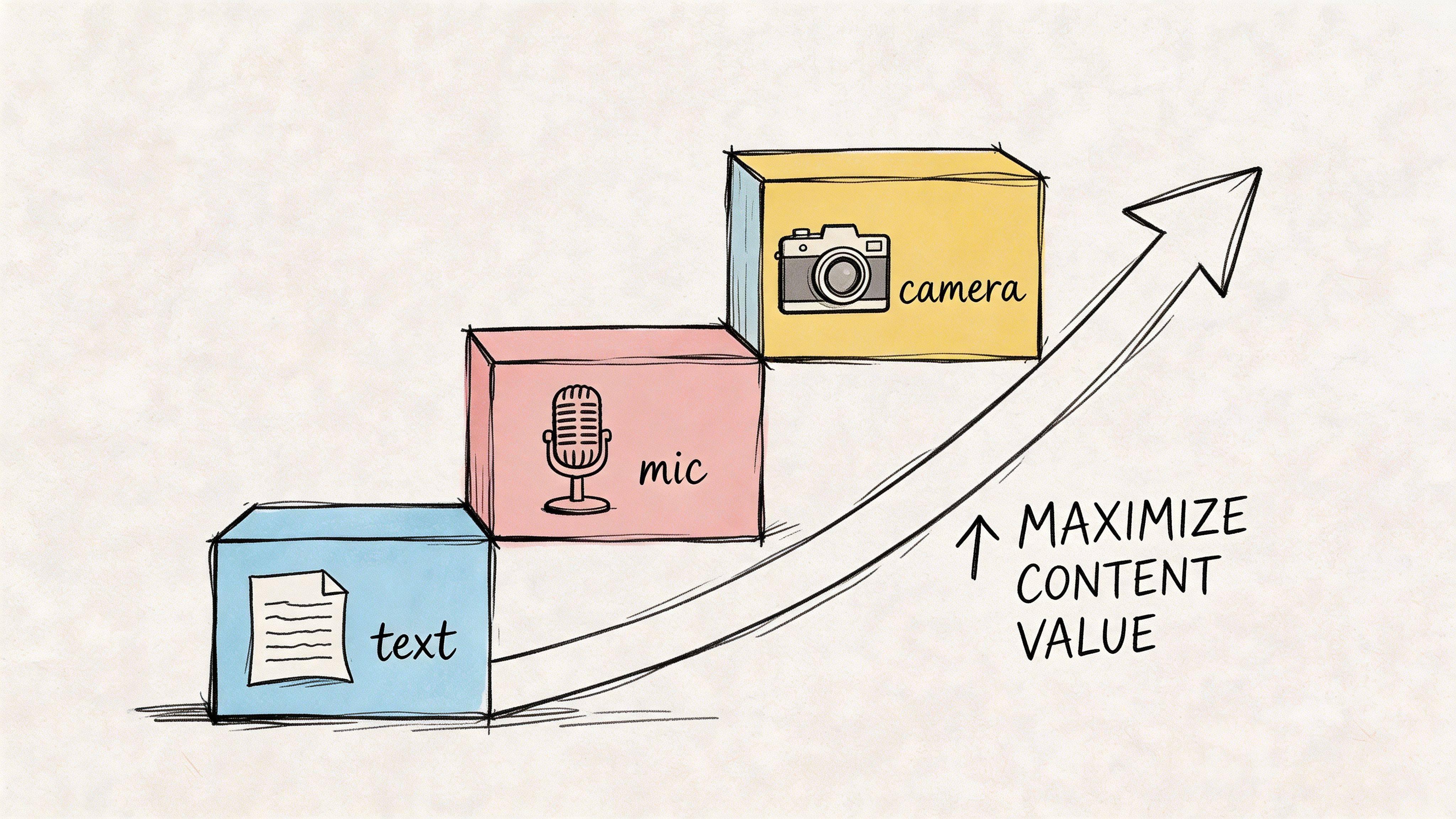
A strong campaign gives you two assets. Revenue signal and content.
Many teams only bank the first one. They record the result, save a few screenshots, and move on. That leaves a lot of value behind, because the main upside comes from systematising what worked. Which creator archetype converted. Which brief angle produced usable footage. Which offer held conversion rate without crushing margin. Which audience segment responded fast enough to justify another round.
Scaling starts with pattern recognition. Rebook based on repeatability, not excitement. If the result cannot be reproduced through the same creator profile, offer structure, and briefing process, it is not a reliable input for future spend.
Reinvest in creators who fit your operating model
The right creators are not always the ones with the loudest engagement numbers. They are the ones your team can use repeatedly without friction.
In practice, the keepers usually share a few traits:
They deliver to brief and on schedule
They generate trackable commercial action
They produce content your team can reuse across channels
They stay brand-safe and consistent across multiple activations
That last point matters more at scale. A creator who performs once but needs excessive hand-holding becomes expensive operationally. A creator who performs slightly less well on the first outing, but delivers clean assets, follows process, and improves with feedback often becomes the better long-term investment.
I usually group rebooking decisions into three buckets. Proven converters, content-first creators, and test candidates. Proven converters get priority budget. Content-first creators may not lead on direct sales, but they often improve paid social and landing page performance once reused properly. Test candidates stay in rotation until there is enough evidence to promote or cut them.
Teams looking for broader guidance on unlocking viral growth with influencer marketing should treat virality as a by-product, not the plan. The plan is controlled repetition with clear rules for rebooking, rate ceilings, content rights, and performance review.
Treat creator content as media inventory
Creator content should be catalogued like paid media assets, not stored like campaign leftovers.
If usage rights are clear, a single strong post can support paid social, landing pages, email, SMS, product pages, organic reposting, and sales enablement. Brand teams often underestimate how much performance they lose because nobody can find the right clip, confirm the licence window, or see how the asset performed after the original post date.
A usable library needs basic metadata:
Creator name and handle
Product or category featured
Audience or region
Format type
Campaign or offer
Usage rights and expiry date
Performance notes by channel
Performance notes are what turn storage into a working system. A file labelled “Creator_UGC_Final_v2” is not useful. A file tagged “skincare demo, strong hook, high thumb-stop rate, approved for paid use until October” is.
A practical guide to building a creator content library for your brand is worth using if your current process still relies on scattered folders and manual file naming.
Scale through process control
Scale comes from reducing decision fatigue.
The strongest teams set rules before volume increases. They maintain an active creator roster. They use standard brief templates with only a few controlled variables. They define when to test a new creator, when to rebook, when to renegotiate rates, and when to stop spend. They review content and commercial performance separately, because some creators earn their place through conversion and others through asset quality.
This is also where margin discipline matters. More creator activity does not always mean more profit. As budgets rise, weak processes show up fast through duplicate outreach, inconsistent rights terms, overpayment for average output, and content that cannot be reused. A scalable programme protects against that by treating creator marketing like an operating system. Inputs are standardised, outputs are measured, and each cycle improves the next one.
That is how a campaign turns into a channel.
From Manual Effort to a Repeatable Growth Machine
Most brands don’t need more creator activity. They need less chaos.
That’s the shift that matters. Instagram influence marketing works when it stops living inside screenshots, scattered DMs, one-off briefs, and reporting debates. It becomes useful when your team can run the same operating rhythm every time. Define the commercial goal. Source against customer fit. Vet properly. Activate with clean briefs. Track with links and codes. Reinvest based on evidence.
The payoff isn’t just better reporting. It’s better decisions. You stop overvaluing vanity metrics. You stop rehiring creators who look good but don’t convert. You stop losing paid content because nobody sorted usage rights. And you stop rebuilding your workflow every single month.
That repeatability also helps your content team. When creator output arrives on a schedule and your campaign windows are predictable, planning gets easier across organic, paid, email, and launch calendars. If your team struggles with content production pace, a practical resource on a comprehensive social content batching guide can help connect creator delivery with the rest of your publishing workflow.
The strongest creator programmes don’t feel exciting internally. They feel organised. That’s usually a good sign. Reliable systems are rarely dramatic, but they’re what produce measurable growth over time.
If you want a practical way to run this without drowning in manual outreach, spreadsheets, and fragmented attribution, Sup helps brands, agencies, restaurants, and multi-location teams launch creator campaigns with sourcing, outreach, tracking, and content management built into one workflow.

Matt Greenwell
Share