Saturday is nearly full. Sunday still has gaps. You know the food is good, the coffee is strong, and the room looks right when the light hits the plates. Yet a nearby brunch spot keeps appearing in local Instagram feeds, tagged by food creators, saved into “weekend plans” folders, and talked about as if it opened yesterday.
That gap usually isn’t about food quality. It’s about visibility with the right local audience at the right moment.
For UK cafés, brunch venues, and breakfast-led restaurants, Influencer Marketing for Brunch and Breakfast Spots works when you treat it like a customer acquisition channel, not a vanity exercise. The right creator partnership can put a new pancake stack, breakfast burrito, or speciality latte in front of people who are already deciding where to go this weekend. The wrong partnership gives you a pretty post and no measurable lift.
The operators who get value from this don’t chase the biggest names. They build local campaigns around clear offers, careful vetting, strong tracking, and content they can reuse long after the original post goes live.
Why Your Brunch Spot Needs More Than Just Good Food
A good brunch menu gets people back. It doesn’t guarantee they’ll find you first.
Most brunch decisions happen before a customer leaves home. They scroll. They compare. They save places that look worth the queue, the train ride, or the detour after the gym. If your venue isn’t showing up in those moments, you’re relying on luck, walk-bys, and the small slice of people already searching for you by name.
That’s why influencer marketing matters for brunch specifically. Breakfast and brunch are highly visual, highly local, and often impulsive. People don’t just want “food”. They want a place that feels worth the outing. A well-shot Reel of syrup pouring over French toast or a creator’s honest review of your shakshuka does something a static menu page rarely can. It creates intent.
Brunch is a social proof business
Brunch customers look for cues. They want to know whether a spot is popular, photogenic, and recommended by someone they trust. That trust doesn’t have to come from celebrities. It often comes from a local creator whose audience already follows them for café finds, neighbourhood recommendations, and weekend plans.
If you want a useful primer on why this behaviour is so powerful, the benefits of social proof for your brand are worth understanding. The principle is simple. People feel more confident choosing a venue when they can see others enjoying it first.
A brunch post that makes someone save your venue for Sunday is often more valuable than a post that gets broad attention from people who live nowhere near you.
What this changes in practice
Once you stop treating creators like optional buzz and start treating them like a distribution channel, your decisions get sharper:
You choose for locality first: A creator with a concentrated audience near your venue can matter more than a bigger account with scattered followers.
You market moments, not menu PDFs: Signature dishes, pours, tablescapes, chef finishes, and atmosphere carry more weight than generic “come visit us” content.
You focus on footfall signals: Saves, shares, booking clicks, code use, and weekday versus weekend patterns matter more than empty reach.
Brunch is competitive because the window is short. You’re not marketing an all-day product with endless consideration time. You’re trying to win a customer’s next Saturday morning. Good food gets you retention. Good creator strategy gets you on the shortlist.
Laying the Groundwork for a Profitable Campaign
The fastest way to waste money on influencer marketing is to start with “we want more exposure”.
Exposure doesn’t tell your team what success looks like. It doesn’t tell a creator what to emphasise. And it doesn’t help you decide whether the campaign paid for itself.
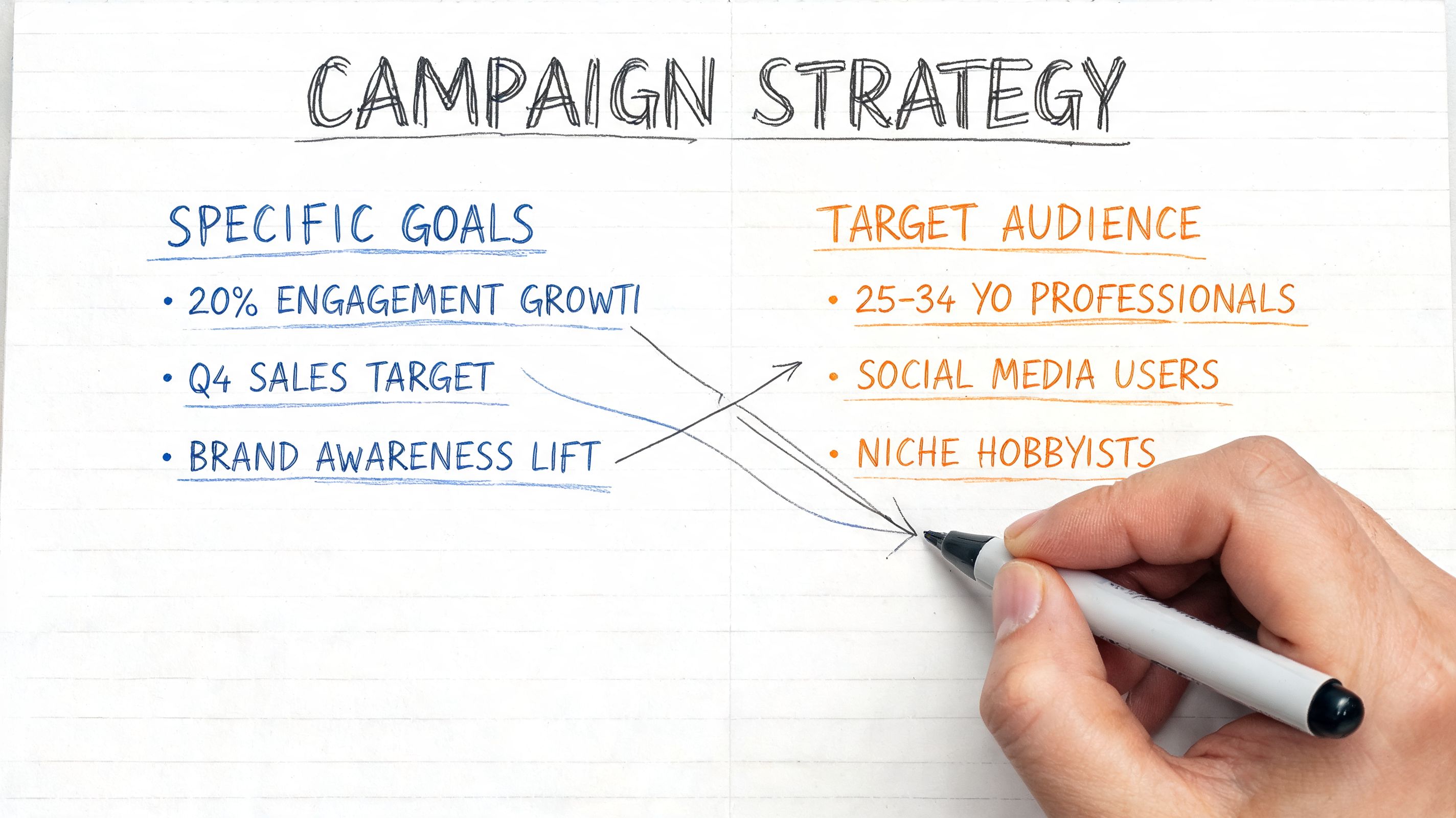
Start with the commercial outcome you want. For brunch spots, that usually falls into one of four buckets: more weekend bookings, more walk-ins for a new item, more user-generated content you can reuse, or stronger awareness in a specific neighbourhood.
Set goals a manager can actually measure
A brunch campaign should connect to operational reality. If your busiest period is Saturday from late morning to early afternoon, the campaign should support that. If your problem is weak mid-morning trade on Sundays, say that directly.
Useful campaign goals include:
Drive bookings for a defined service window: For example, focus the campaign on Saturday and Sunday brunch rather than “general awareness”.
Launch a menu item with a trackable offer: This works well for seasonal pancakes, breakfast sandwiches, or premium coffee specials.
Build a bank of reusable content: If your own social feed lacks quality video, creator output can solve two problems at once.
Increase local discovery: This matters when you’ve opened recently, renovated, or changed concept.
Write the goal in plain English. If a floor manager can’t understand it in ten seconds, it’s too vague.
Budget based on creator tier and campaign shape
Budgeting gets easier once you stop assuming every influencer deal is expensive. In the UK food and hospitality sector, influencer marketing budgets have risen by over 15% year-over-year as of 2025, and pricing still allows smaller venues to run local campaigns without agency-sized spend, according to Mustard’s breakdown of restaurant influencer marketing costs. The same source notes that nano-influencers (1K–10K followers) often work for a complimentary meal up to £100 per post, while micro-influencers (10K–50K followers) range from £100–£500, which means a small breakfast spot can often run a local push for £150–£500.
That matters because brunch is usually a hyper-local play. You’re not trying to dominate the whole country. You’re trying to become one of the places people in your area think of when they want breakfast out.
A practical way to split spend
Not every campaign needs the same structure. I usually think in campaign shapes rather than fixed templates.
Campaign shape | Best use | Typical creator mix |
|---|---|---|
Soft local push | Quiet periods, steady discovery, first test | Mostly nano creators |
Menu launch burst | New dish, limited-time special, weekend promo | Nano plus a few micro creators |
Content-first campaign | Need Reels, photos, and UGC library | Creators with strong food videography |
Neighbourhood awareness push | New opening or new area focus | Local creators with city-specific audiences |
The point isn’t to buy the most reach. The point is to buy the most relevant attention.
Practical rule: Set aside budget for both creator fees and in-venue experience. A rushed service, poor plating, or bad lighting can ruin the content you paid to generate.
Match the campaign to your real margins
Some brunch operators underinvest because they compare creator spend to a single plate sale. That’s the wrong lens. A brunch visit often includes multiple covers, drinks, add-ons, and future repeat visits. It also produces content that can keep working across your own channels.
That’s why I like to judge spend against the value of filling the right tables, not just the cost of one comped dish.
If your team is building the broader digital side around this, the ultimate guide to restaurant digital marketing is a useful companion because it places creator campaigns in the wider mix of bookings, search, email, and owned social.
Know what you’re asking the campaign to do
Before you contact anyone, answer these questions:
Which service period matters most? Saturday brunch, Sunday breakfast, or both.
Which item or experience is the visual hook? Pancake stack, eggs dish, latte art, brunch cocktails, terrace seating.
What action should the viewer take? Book, walk in, save the venue, redeem an offer.
What proof will count as success? Code redemptions, booking clicks, content quality, or customer mentions at till.
Brunch marketing becomes profitable when the campaign starts with intent. Not when it starts with a list of influencers.
Finding and Vetting Your Ideal Local Foodies
The creator with the biggest following in your city isn’t automatically your best partner. For brunch spots, local fit beats broad popularity more often than owners expect.
A creator can have polished content, a healthy-looking profile, and thousands of likes, then still send you almost no real customers because their audience isn’t local, their engagement is inflated, or their content style doesn’t move people from “looks nice” to “let’s go on Sunday”.
Start with who influences local dining decisions
For brunch, I’d rather work with a creator known for neighbourhood café recommendations than a lifestyle account that occasionally posts food. You want someone whose audience already expects local suggestions.
In food campaigns, micro-influencers can achieve up to 60% higher engagement rates than macro-influencers, and a strong vetting standard is an authentic engagement rate of 4-7%+ with at least 70% of the creator’s audience in your target city, according to Flaminjoy’s food industry influencer ROI guide. That local audience concentration matters more for brunch than for many other sectors because your product is tied to physical footfall.
What to check before you send a single invite
Don’t vet creators by instinct alone. Use a checklist and stick to it.
Criterion | What to Look For | Red Flag |
|---|---|---|
Audience location | Majority of followers in your city or immediate catchment area | Audience spread across unrelated countries or cities |
Engagement quality | Real comments that reference the venue, food, or local area | Generic comments, emoji-only replies, or obvious pods |
Content fit | Strong food video, natural voice, good lighting, clear recommendations | Random content mix with weak food storytelling |
Posting consistency | Recent posts and active Stories | Long gaps or an inactive account |
Brand alignment | Style matches your venue, price point, and customer type | Luxury creator for a casual café, or vice versa |
Reliability signs | Clear communication, media kit if relevant, previous hospitality work | Delayed replies, vague deliverables, or no posting pattern |
The red flags matter because a brunch campaign has a narrow conversion window. If someone sees the post on Friday night, they may decide by Saturday morning. Weak trust kills that momentum.
Follower count is a screening tool, not a decision tool
A smaller creator with real local influence often outperforms a larger account that looks impressive on paper. Brunch is habit-driven and proximity-driven. The audience has to feel, “I could go there this weekend.”
Here’s the sort of evaluation I use in practice:
Would their audience travel to your venue?
Do they make food look desirable, not just decorative?
Do they write captions or voiceovers that create intent?
Can they show the experience beyond the plate, including queue, table, coffee, and atmosphere?
If the answer is no to two of those, I move on.
The best brunch creators don’t just show the dish. They show why the morning feels worth planning around.
Manual discovery versus platform-led sourcing
Manual search still works. You can search location tags, city hashtags, competitor mentions, and local “best brunch” style saves. But it’s slow, and it often leaves teams juggling screenshots, DMs, and half-complete notes.
If you want a cleaner workflow for discovery, this guide on how to find local food influencers in your city outlines a practical sourcing process. Even if you do the outreach yourself, having a repeatable system saves time and reduces bad picks.
Questions to ask before approving a creator
I don’t need every creator to look identical. I do need them to answer a few important questions through their profile and conversation.
Can they film in a way that suits your space? A dim café and a sunlit brunch bar need different strengths.
Do they understand hospitality timing? Weekend service is tight. Late arrivals or poor communication cause operational headaches.
Will their content feel authentic? If every caption reads like an ad, trust drops.
Can they follow a brief without flattening their voice? The post should still sound like them.
The mistake that causes most bad outcomes
Restaurants often pick creators they personally like instead of creators whose audience matches the business objective. That’s how you end up with attractive content and weak redemption.
Choose for customer overlap, local relevance, and creative fit. Not because the account looks “cool”.
If you run several local campaigns, keep a live shortlist of creators by neighbourhood, style, reliability, and results. Over time, that list becomes one of your most valuable marketing assets.
Crafting an Irresistible Outreach and Offer
Most creators can spot a lazy outreach message instantly. It usually says some version of “Hi, we love your content, would you like to collaborate?” with no idea, no structure, and no reason to say yes.
That approach fails because creators are making a decision in seconds. They want to know whether the venue fits their audience, what the offer is, how much work is expected, and whether the experience is worth posting about.

With 81% of UK consumers researching or purchasing dining experiences after seeing influencer posts, the offer can’t be vague or forgettable, as noted in BestPOS’s restaurant influencer marketing guide. If the content is supposed to convert a viewer into a visitor, the collaboration needs a clear hook.
Build the offer around a story, not a free meal
A free brunch is fine. A free brunch with no angle is easy to ignore.
The strongest brunch offers usually include one of these:
A menu moment: New pancakes, a seasonal special, a chef feature, or a signature breakfast board.
An experience angle: Early access, terrace brunch, tasting flight, or a behind-the-scenes look.
A shareable format: Plus-one invite, hosted tasting, creator morning event, or a content window with strong natural light.
A clear audience benefit: A promo code, a booking incentive, or a limited-time reason to visit.
A brunch campaign should give the creator something to say beyond “I went here”.
What good outreach sounds like
You’re not writing a fan note. You’re making a business proposal that respects the creator’s time and still feels human.
Hi [Name],
I run [Venue] in [Area]. We’re a brunch and breakfast spot known for [specific dish or experience]. I’ve followed your local food content and think your audience is a strong fit for what we offer.
We’d like to invite you in for [specific experience], ideally on [timing], in exchange for [deliverables]. We’re looking for content that highlights [menu item / atmosphere / weekend offer], and we can provide [plus one / paid fee / complimentary meal / booking link / unique code].
If it sounds relevant, I can send a short brief with the concept, timing, and deliverables.
Thanks, [Name]
Short wins. Specific wins. Respectful wins.
If you want another angle on structure and wording, this resource on how to write the perfect influencer outreach email is useful for tightening your messages without making them sound robotic.
What to include in the brief
Once a creator says yes, send a proper brief. Don’t leave key details trapped in a DM thread.
A workable brief should cover:
Visit details: Date options, booking name, arrival window, plus-one policy.
Creative focus: Which dishes or drinks matter most, and what story angle you want.
Deliverables: Reel, Story frames, stills, timing, tagging, link use, code mention.
Usage rights: Whether you want to repost organically or use the content in ads.
Operational notes: Service timings, table hold period, contact person on site.
Content ideas that suit brunch particularly well
Brunch creates opportunities other restaurant categories don’t always have. It’s social, daylight-friendly, and built around rituals people enjoy sharing.
Some of the best-performing concepts are simple:
A creator orders the “ideal table” and walks viewers through it.
A side-by-side of sweet versus savoury choices.
A morning-in-the-neighbourhood format ending at your venue.
A “what to order if…” recommendation based on appetite or mood.
Behind-the-pass footage showing a signature plate being finished.
For teams trying to sharpen short-form video output, Direct AI's proven Reels strategies can help with pacing, hooks, and editing ideas that suit food content.
One useful example format sits below.
Don’t over-script the creator
Restaurants often ruin good collaborations by trying to control every word and shot. The creator’s voice is part of the value. If you flatten it into ad copy, the post loses credibility.
Give direction, not a script.
A better instruction sounds like this:
Focus on the stack of pancakes, the coffee pour, and the relaxed weekend atmosphere. Mention that bookings are recommended for Saturday. Keep the review in your own voice.
That leaves room for authenticity while protecting the commercial objective.
Paid versus gifted collaborations
Not every creator should be treated the same way. If someone has clear local influence, strong production quality, and a history of hospitality content, pay them. If they’re earlier-stage but highly local and a fit for your audience, a hosted meal may still make sense.
The deciding factor isn’t whether you can avoid a fee. It’s whether the arrangement is fair and likely to produce content with business value.
For brunch spots, the best outreach says three things clearly. Why them. Why now. Why their audience would care.
Managing the Campaign and Measuring What Matters
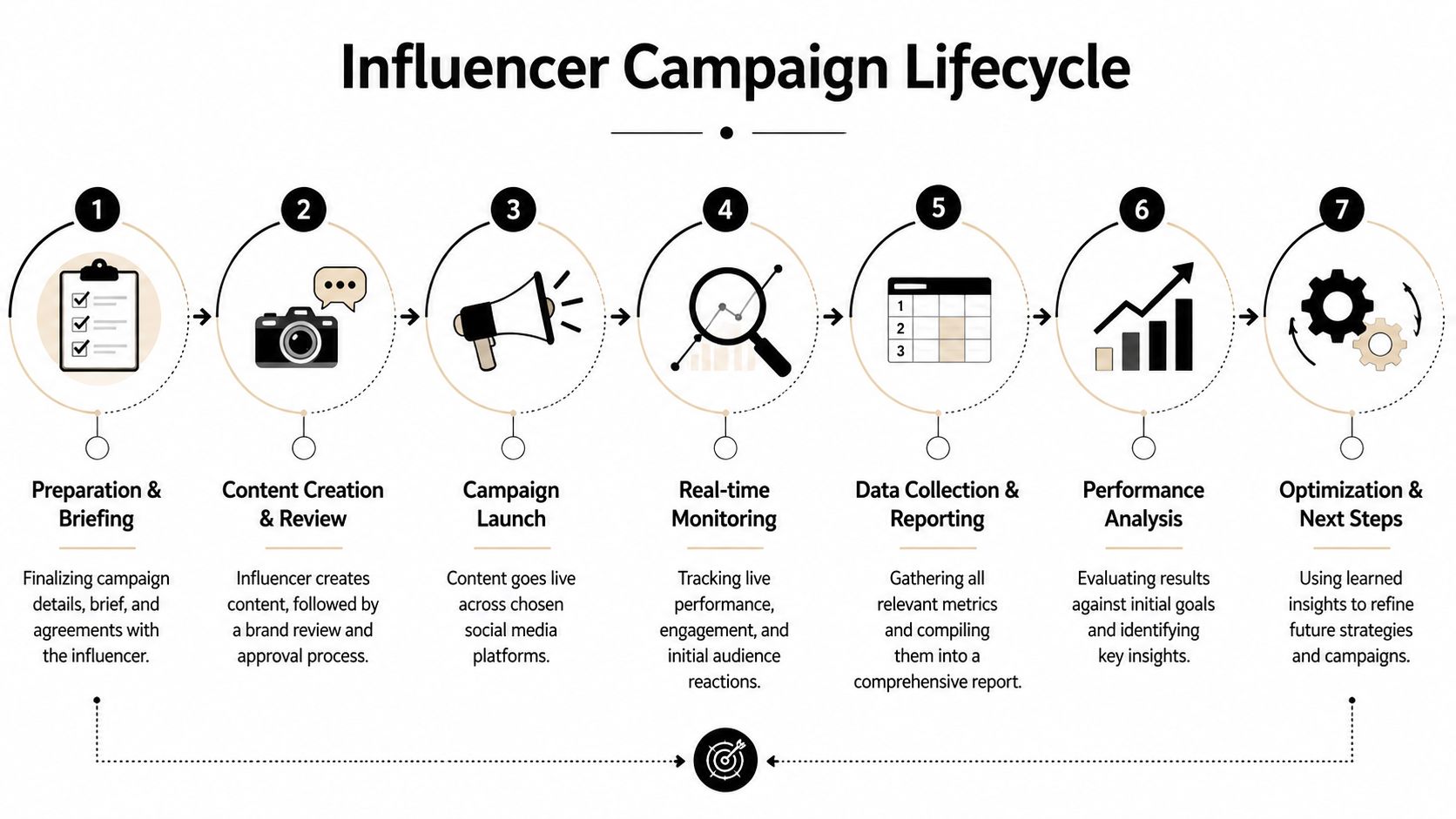
A surprising number of restaurant influencer campaigns still run through screenshots, spreadsheets, and scattered DMs. That might be manageable for one creator. It falls apart fast when you’re coordinating several visits across multiple weekends.
The primary issue isn’t admin. It’s measurement. If you can’t tie activity back to bookings, redemptions, footfall patterns, or reusable content value, you’re left arguing about whether a post “felt successful”.
The old way breaks under pressure
Manual campaign management usually creates the same problems:
Messages get buried: Visit times, content requirements, and approvals drift across inboxes.
Codes get reused badly: Two creators mention the same offer and attribution gets muddy.
No one owns reporting: The team remembers likes, but not bookings or redemptions.
Content disappears: Great UGC sits in tagged posts instead of a usable library.
Structure matters. According to IQFluence’s guide to restaurant influencer marketing, up to 70% of unstructured campaigns fail due to poor vetting, while structured attribution can produce £6.50 ROI per £1 spent and a 40% uplift in traffic. The same source notes that platforms automating unique code generation and tracking can save teams up to 95% of their time.
That’s the difference between “we did some influencer activity” and “we can show what happened”.
What to track for a brunch venue
Views matter, but they’re not enough. For brunch operators, I care more about actions that suggest real intent.
Use a reporting sheet or dashboard that captures:
KPI | Why it matters for brunch | What to look for |
|---|---|---|
Booking clicks | Shows direct movement from content to reservation intent | Which creator drove the strongest action |
Promo code redemptions | Gives hard attribution for visits or offers | Whether the code was mentioned clearly |
Walk-in mentions | Captures influence that won’t always use a code | Front-of-house should ask casually |
Saves and shares | Strong signal for weekend planning behaviour | Especially useful for local discovery posts |
UGC quality | Determines reuse value across your own channels | Clean visuals, strong hooks, natural voice |
Revenue by creator | Lets you compare creators on commercial output | Useful for repeat partnerships |
Set up attribution before the first post
Don’t wait until content goes live to think about measurement. Every creator should have their own tracking setup.
At minimum, use:
A unique promo code for each creator.
A unique UTM link to your booking page or campaign landing page.
A shared naming convention so your team can identify each collaboration quickly.
Front-of-house prompts so staff ask guests how they heard about you when relevant.
This matters even more for brunch than dinner because weekend baseline traffic is already strong. Without clean tracking, it’s easy to confuse normal busy service with campaign impact.
If two creators post in the same weekend and your till only shows one generic code, you haven’t measured performance. You’ve blended it.
Approvals and content handling
Some brands over-approve and slow everything down. Others approve nothing and then panic when a post misses the mark.
A practical middle ground works better:
Approve the brief and concept, not every sentence.
Review content only when the agreement includes approval rights.
Clarify mandatory elements such as tags, location pin, code mention, or booking link.
Save every final asset in one organised content library.
A platform can help. Tools that centralise codes, outreach, timelines, reporting, and content storage reduce friction. Sup is one example. It combines creator sourcing, campaign setup, communications, tracking links, promo codes, and a dashboard for views, clicks, redemptions, and revenue attribution in one workflow.
Turn creator content into a second channel
The first life of a creator post is the creator’s audience. The second life is often more valuable. That content can support your own Instagram, paid social, website pages, menu launches, and booking campaigns.
The question to ask after every collaboration is simple: which assets are reusable?
Good reuse candidates usually include:
Short vertical clips of plating, pours, and first bites
Voiceover reviews that sound natural and specific
Table shots showing multiple items together
Environment clips that establish wait, buzz, and atmosphere
A reporting rhythm that actually works
I prefer a simple cadence over bloated reports:
During launch: Watch code use, comments, booking clicks, and staff feedback.
After each creator post: Log immediate outcomes and content quality.
At campaign end: Compare creators by business result, not just engagement.
Before the next campaign: Keep the top performers and cut the rest.
This makes your creator roster stronger over time. It also protects budget. Too many venues keep hiring underperformers because they remember the aesthetics and forget the outcomes.
The main measurement lesson
Brunch campaigns look deceptively easy because the content is fun and the product is visual. But the economics only become clear when every creator has a defined offer, trackable path, and post-campaign review.
That’s what turns creator marketing into an operating system rather than an occasional experiment.
Common Pitfalls and How to Optimise Your Strategy
The biggest mistake owners make is assuming a busy service after a campaign proves the campaign worked. Sometimes it did. Sometimes you just had good weather, a payday weekend, or normal brunch demand.
Attribution is where optimism tends to outrun reality.
A useful caution comes from Aviva Goldfarb’s discussion of restaurant influencer marketing attribution. It notes that campaigns can generate a 10-30% foot traffic increase, but it’s hard to distinguish influencer-driven repeat brunch visits from organic weekend traffic. It also points out the need for stronger tracking to isolate incremental revenue and avoid promo code cannibalisation.
Pitfall one: judging success by noise
A post can get strong engagement and still produce weak commercial value. That happens when the audience is broad, the offer is unclear, or the content entertains without giving people a reason to visit.
Optimise by changing one variable at a time:
Test different offers: Complimentary coffee add-on, priority booking prompt, limited menu item.
Test different hooks: Best pancakes, hidden local brunch spot, worth-the-queue coffee, chef special.
Test different creator styles: Voice-led reviews versus montage-style visuals.
Pitfall two: posting everyone at once
A stacked launch feels exciting, but it often muddies learning. If several creators go live together with overlapping offers, you can’t tell who drove what.
Space posts where possible. Give each creator a distinct code and a specific content angle. That makes optimisation possible instead of speculative.
One creator should own one offer path. The cleaner the path, the cleaner the decision after the campaign.
Pitfall three: ignoring repeat visit behaviour
Brunch venues often see delayed effects. Someone watches a Reel this weekend, then visits two weeks later with friends. Another customer uses the code once, then comes back without it. If you only count first-use redemptions, you’ll understate value. If you count every busy Saturday as campaign success, you’ll overstate it.
A better approach is to combine:
Unique first-visit code use
Booking link data
Front-of-house “how did you hear about us?” notes
CRM or loyalty tagging if you have it
Repeat use patterns tied to campaign periods
Pitfall four: treating every underperforming post as a creator problem
Sometimes the issue is the brief. Sometimes the dish looked flat. Sometimes the venue was too dark, the service was slow, or the call to action was buried.
When a post underperforms, review the full chain:
Area | What to ask |
|---|---|
Offer | Was there a clear reason to visit now? |
Creative | Did the content show a compelling brunch moment? |
Local fit | Was the audience near enough to act? |
Service | Did the on-site experience support good content? |
Tracking | Could people actually book or redeem cleanly? |
Optimisation in brunch marketing is rarely about finding one magic influencer. It’s about tightening the system around creator fit, offer clarity, timing, and attribution until the campaigns become more predictable.
Turning Brunch Posts into Predictable Profit
Influencer Marketing for Brunch and Breakfast Spots works when you stop chasing attention for its own sake. The operators who get real value treat it like a repeatable local growth channel.
That means planning around footfall goals, choosing creators for local audience fit, making the offer easy to act on, and tracking every campaign tightly enough to learn from it. It also means valuing the content after the post, not just during it. If you want to extend the life of your creator assets, this guide on how restaurants use influencer content as paid ad creative is a smart next step.
The best brunch campaigns don’t depend on luck or one viral Reel. They build a reliable system for getting discovered, filling tables, and turning a weekend visit into a habit.
If you want help running creator campaigns without juggling manual outreach, spreadsheets, tracking links, and content collection yourself, Sup offers a done-with-you workflow for sourcing local nano and micro creators, launching campaigns, and attributing results back to views, clicks, bookings, redemptions, and revenue.

Matt Greenwell
Share